Pietro's Mother's Relationship with Bruno
The Eight Mountains: A NovelPietro’s mother’s relationship with Bruno begins with an act of attention and grows into practical, sustained care. She sees beyond the boy’s silence and his difficult circumstances in Grana, works to secure his education, and makes her home a place where he can be taught, welcomed, and treated as someone whose future matters. Years later, she remains a link between Bruno and Pietro, carrying news between friends who otherwise might let their friendship go unspoken.
An attentive first encounter
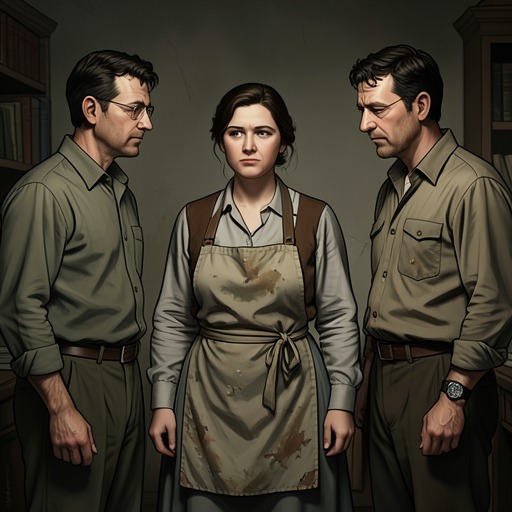
Pietro’s mother brings to Grana the same impulse to notice and respond to need that shapes her work in Milan. A former nurse in Veneto, she takes a newly created health-worker position in a western working-class district, supporting women during pregnancy and monitoring infants through their first year. Her work also includes assessing children’s home circumstances; when serious cases require referral to juvenile court, she faces the decision with anguish but does not abandon it. The solidarity she shares with other women doing this work reflects a conviction that children’s welfare calls for active responsibility, not distant sympathy.
That conviction enters her relationship with Bruno when she discovers that Pietro is making friends with him and asks whether Bruno’s aunt and uncle treat him well, whether he goes to school, and whether he likes it. Bruno cannot bring himself to claim that he does. When she asks whether his parents love one another, he looks away and grimaces; she understands that the subject is uncomfortable and does not press him. Her attention is probing, but it is also responsive: she recognizes when a question has reached a boundary. Soon afterward, she decides to intervene more directly in his circumstances.
Education as practical care
Pietro’s mother understands that she cannot change Bruno’s prospects by herself. She sees that his mother is unlikely to help with his schooling and therefore concentrates on building an alliance with his aunt. Her method is persistent and personal: she visits the family, returns in a friendly but determined manner, and keeps working to gain cooperation. Eventually the aunt agrees to send Bruno to school during winter and to have him come to Pietro’s family home for homework during summer. The arrangement gives him access to regular study and to a household that takes his learning seriously.
Bruno comes three times a week, washed and dressed for the lessons. Pietro’s mother has him read aloud from books by Stevenson, Verne, Twain, and Jack London, and lets him keep the books so that he can continue practicing in the pastures. He enjoys novels, while grammar is much harder: the rules of Italian feel to him like a foreign language, and he stumbles over spelling and conjunctions. Pietro feels embarrassed on Bruno’s behalf and resents what he sees as the unfairness of the work being imposed on him. Bruno, however, does not complain. He understands how much his effort matters to Pietro’s mother and works hard, perhaps because being important to someone is new to him.
Her teaching is therefore more than a route through schoolwork. It joins instruction to recognition: she expects effort from Bruno because she believes his education deserves attention. When he passes the first, second, and third years of senior school and earns an average exam mark, his aunt immediately telephones the family in Milan with the news. Pietro’s mother is delighted. On returning to Grana, she gives Bruno a box of chisels and gouges for working with wood, marking his achievement with a gift suited to a skill beyond the classroom. Her response also shows that she regards his schooling not as a completed task but as the beginning of further possibilities.
A place in the family
On the few summer occasions when Bruno is allowed to join Pietro’s family on an outing, the boy’s relationship with Pietro’s parents becomes especially visible. Whether they are taken to a summit by Pietro’s father or simply share a picnic in a field, Bruno adapts to the family’s rules and rituals. With Pietro’s mother he is willing to be fed, dressed, and caressed; with Pietro’s father he shows a respect close to admiration, following him along the path and listening intently to his explanations. The ordinary gestures matter precisely because Bruno has not known this kind of family welcome before.
Pietro notices the ease with which Bruno approaches his father and the confidence with which he asks questions. He sometimes thinks Bruno would have made a more suitable son for him, a thought that brings pride in the welcome his parents give Bruno together with discomfort and jealousy. His mother’s care thus affects not only Bruno’s experience of the family but also Pietro’s sense of his own place within it. She does not treat Bruno as a substitute for her son; rather, the care she extends to him makes visible a need in Bruno that Pietro had not fully understood, while complicating Pietro’s awareness of the different kinds of closeness each boy has with his father.
Keeping the connection alive
The relationship outlasts the lessons. After Pietro’s father dies, Pietro’s mother comes to Grana with a friend who stays close to her through the summer. Their quiet companionship shows the network of female relationships she has cultivated, in contrast with the loneliness Pietro associates with his father. This matters to her connection with Bruno because she continues to act as a person who maintains ties and notices when others are becoming isolated.
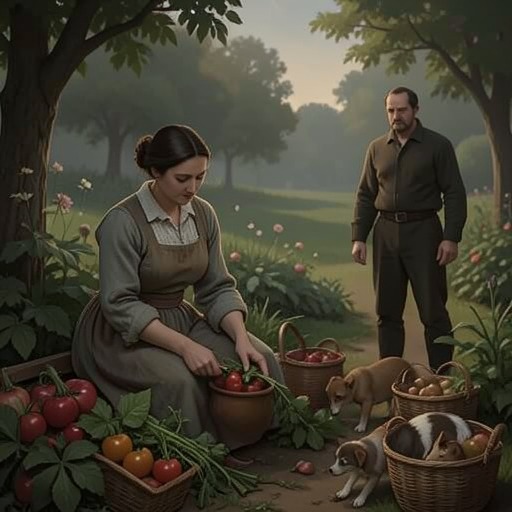
As Bruno and Lara’s family and business come under strain, Pietro’s mother becomes especially attached to their daughter, Anita. She often keeps Anita at Grana during summer, easing the burden on her parents, who work excessively. She worries about the worsening crisis between Bruno and Lara: Lara is exasperated by debt, while Bruno retreats into silence and work. She writes to Pietro about Anita’s growing character and about what she fears may happen to Bruno. When the partnership ends and the agricultural business closes in autumn 2013, she sends Pietro the news with alarm as well as sadness, saying that Bruno has lost everything and is alone, and asking whether Pietro can do anything.
Her role as intermediary is consequential because Pietro and Bruno might otherwise go years without contacting one another, as though their friendship needed no maintenance. Pietro’s mother supplies the news that keeps Bruno present in Pietro’s life, first through the account of his work and family, and later through the report of his collapse. At the rebuilt house in the mountains, she is happy to see what Pietro and Bruno have made together. The inscription commemorating Giovanni Guasti calls memory the most beautiful refuge; her presence at the house and her long care for Bruno help make that remembrance a shared family bond rather than a private inheritance. Her relationship with Bruno is ultimately expressed less through declarations than through repeated acts: asking, visiting, teaching, welcoming, giving, helping with Anita, and carrying news across the silence between the two friends.